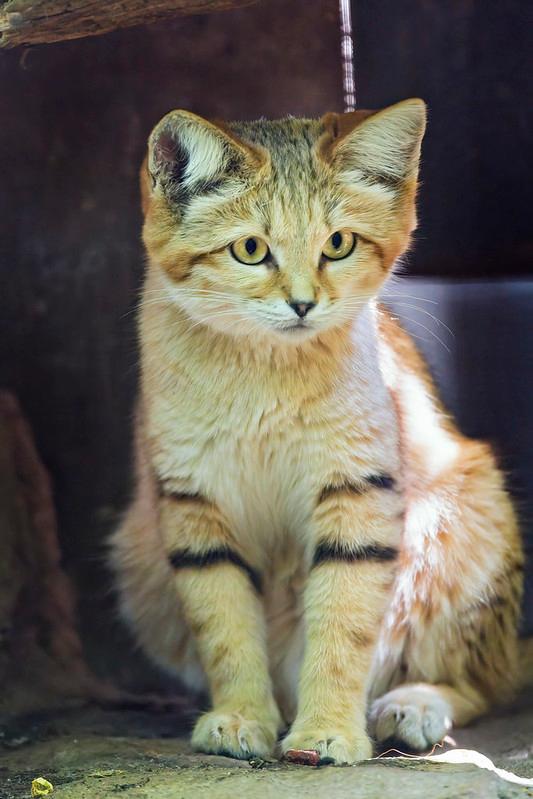


Sand Cat
The sand cat (Felis margarita) belongs to the Felidae family. It is one of the small cat species best adapted to desert life. One of its most distinguishing features compared to other cats is its large, broad ears. Its thick, furry paws are also notable. These specialized paws provide protection when walking on hot desert sand and help it move silently.
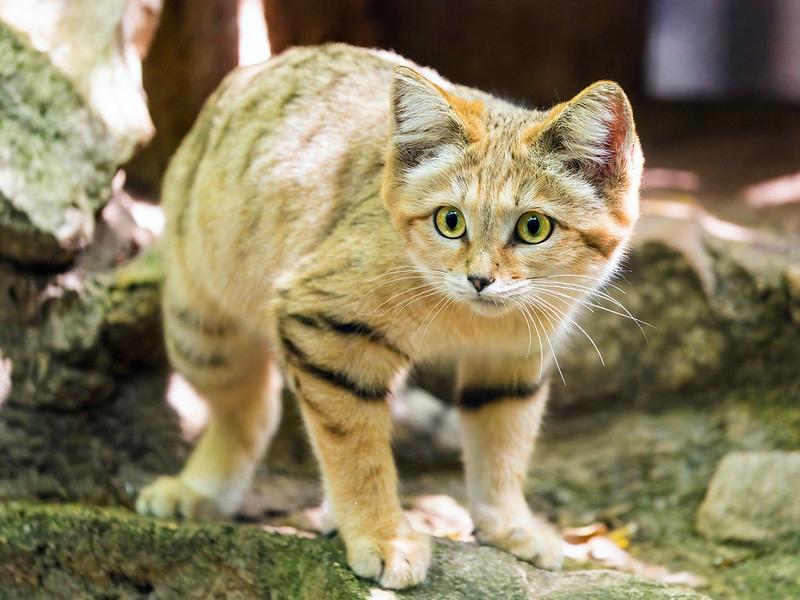
A sand cat observing its surroundings (Flickr)
What Colors Do They Have?
The fur color of sand cats is quite light, adapted to blend into desert environments. Their coats may be light yellow, pale brown, or sandy in color, allowing them to camouflage easily. The underside of the body is typically white. Prominent black stripes are visible on the back of their ears.
This species does not occur naturally in Türkiye; it lives in the deserts of the Sahara and the Middle East, where individuals are generally light sandy in color.
How Large Do They Grow?
The body length of sand cats, from head to tail, ranges from 40 to 57 cm. Their tails can measure 23 to 31 cm in length. Their weight typically falls between 2.0 and 3.5 kilograms.

A sand cat cleaning its paws (Flickr)
What Do They Eat?
In the wild, sand cats feed on small rodents, birds, reptiles, insects, and invertebrates.
They particularly prefer hunting rodents and lizards, which are common in desert habitats.
Where Do They Live?
Sand cats typically inhabit the deserts of North Africa, the Middle East, and Central Asia. They do not occur naturally in Türkiye.
They select sandy and stony deserts, arid steppe regions, and areas with sparse vegetation as their habitat.
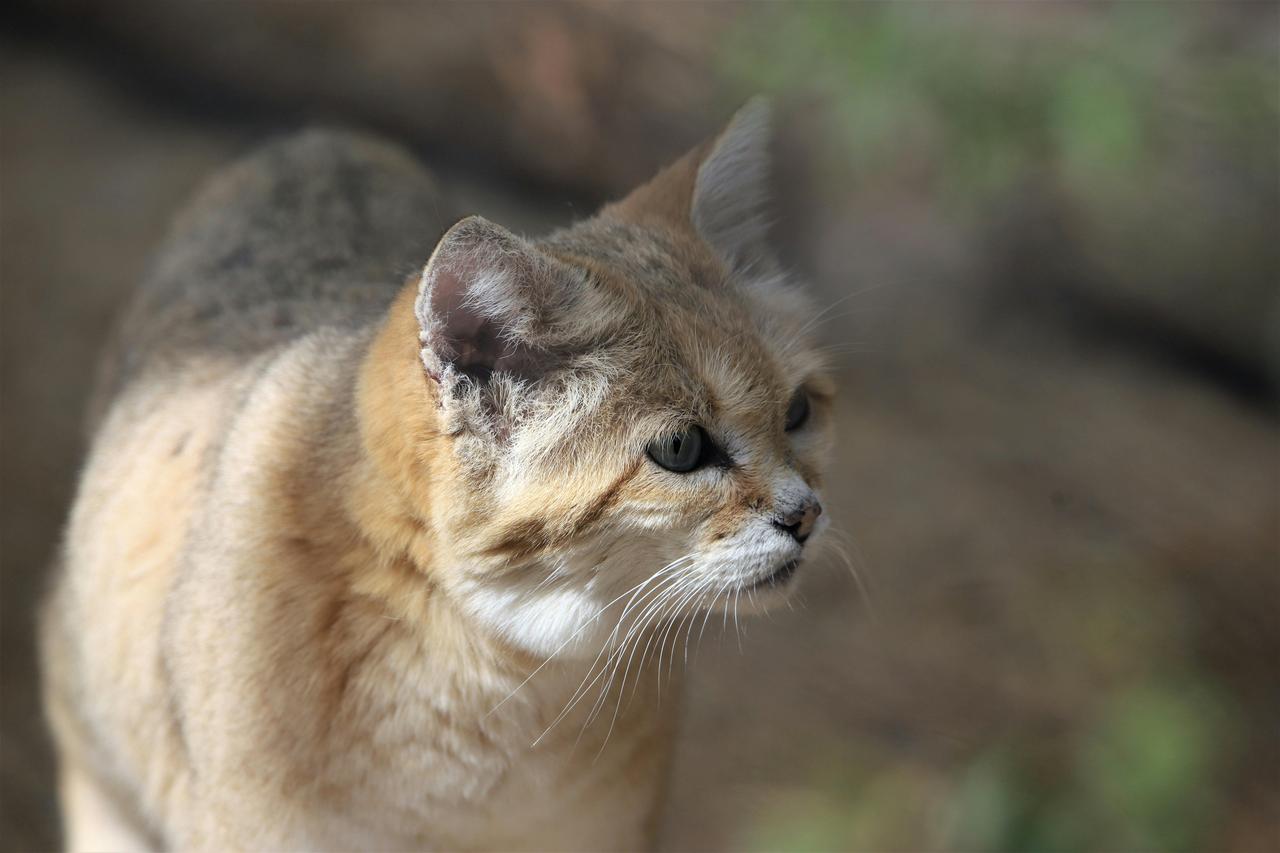
A sand cat (Pexels)
Contributions to the Ecosystem
Sand cats help maintain balance in desert ecosystems by preying on small rodents, birds, and reptiles, preventing these species from overpopulating. They also play a significant role in the food chain by feeding on insects and invertebrates.
Conservation Status
The sand cat is classified as “Least Concern” by the International Union for Conservation of Nature (IUCN). This indicates that its population is not currently under significant threat, but the protection of its habitat remains important.