

Sadaka Stone
Sadaka stones are one of the most elegant and thoughtful methods of mutual aid used by people in the past. During the Ottoman period, these stones served as quiet corners of charity that enabled assistance to be given without causing harm or embarrassment to anyone.
What Is a Sadaka Stone?
Sadaka stones are stone pillars typically erected at mosque corners, street entrances, or beside hospitals, featuring a small hollow at the top. These stones functioned as invisible bridges of kindness, connecting those who wished to give help with those in need without either party being seen or identified.
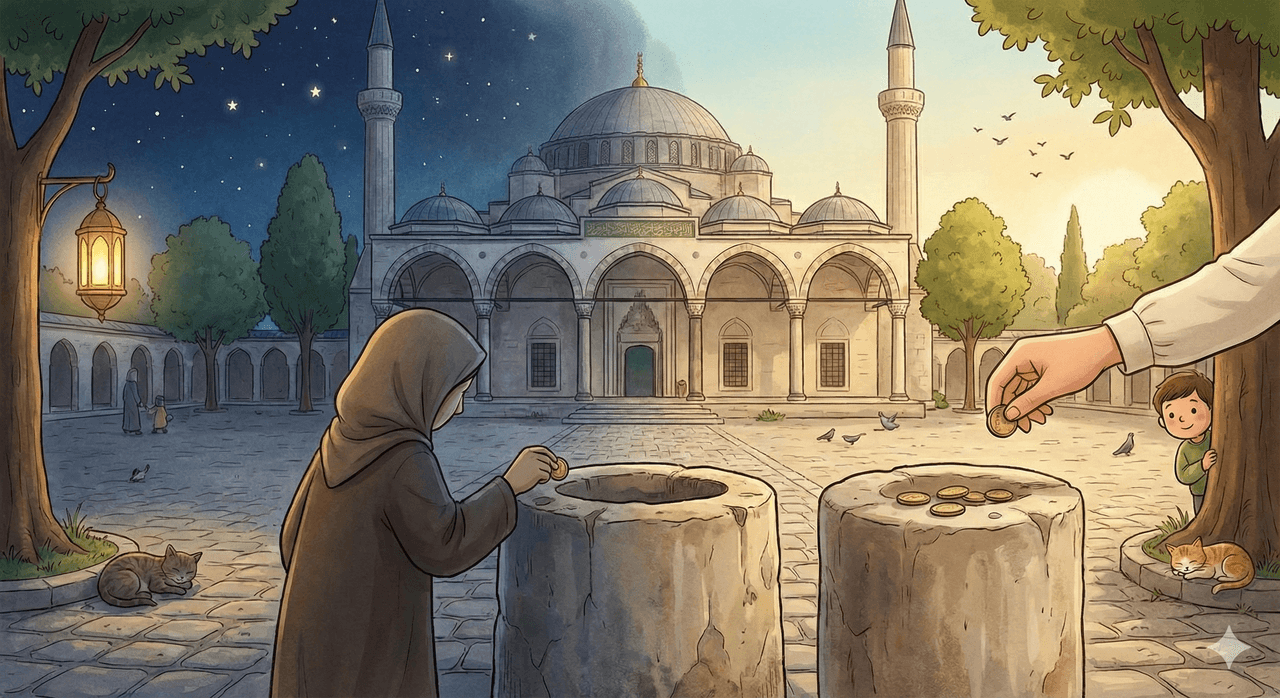
An image depicting a sadaka stone (generated by artificial intelligence)
How Was It Used?
The mechanism was simple yet profound: those in better circumstances would quietly leave a small amount of money in the stone’s hollow, usually under cover of night, so that no one would see them. Those in need would come to the stone and take only the amount required for their immediate needs. In this way, neither the giver knew to whom they had given, nor the receiver knew from whom they had received.
Why Is It Called the “Stone That Does Not Break the Heart”?
In the past, our elders placed great importance on ensuring that those receiving help did not feel shame or emotional pain. Thanks to the sadaka stone, a child or family in need could meet their requirements without having to ask anyone directly. Moreover, from an outsider’s perspective, it was impossible to tell whether a hand reaching the stone was leaving money or taking it. This was the finest embodiment of the principle that “the right hand should not know what the left hand gives.”
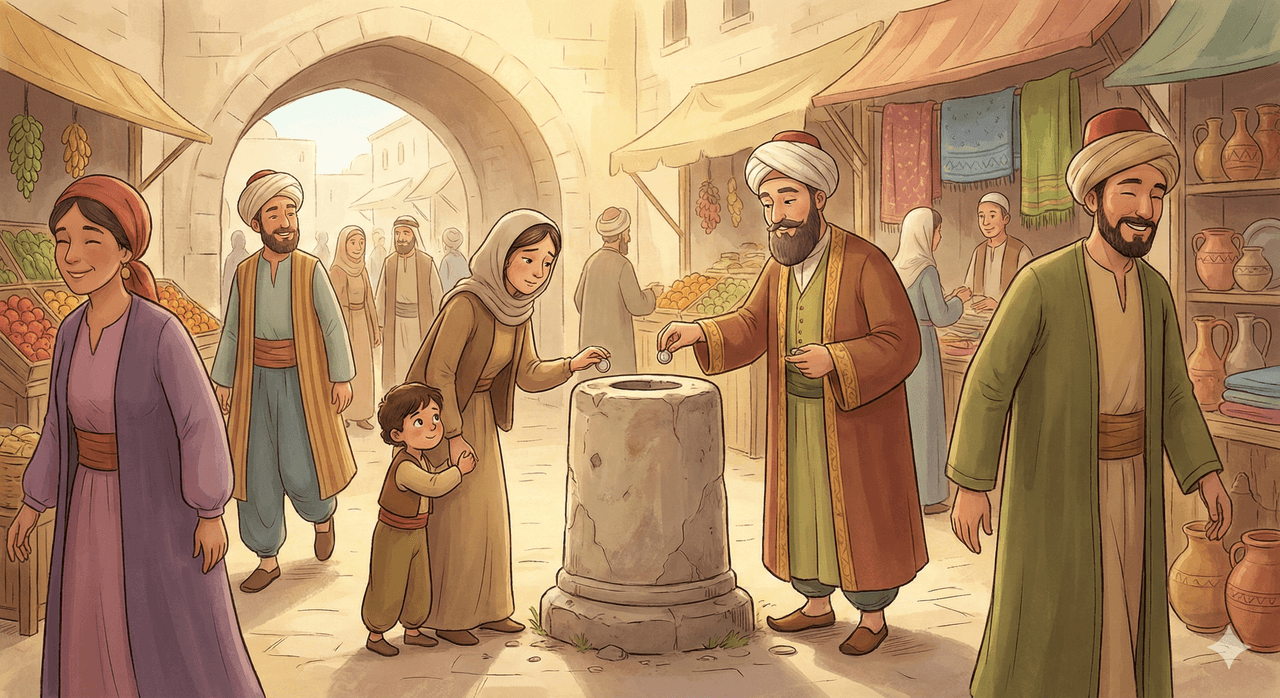
Depiction of the sadaka stone in public perception (generated by artificial intelligence)
Where Are They Found?
These stones were not only places for monetary aid. Sometimes, nearby, there were also “lost property stones” where people could leave or retrieve misplaced items. Today, you can still see these historic and benevolent stones in the courtyards of old mosques in many of our cities, including Edirne, Istanbul and Aydın.