



On Atatürk's Path: The Fundamental Principles of Atatürk
Can a country have a compass? Just as a vast ship needs guiding ideas to find its way across an endless sea, a nation also requires guiding principles to reach a modern and peaceful future. Atatürk’s Principles are the name of this very special path drawn for the Türkiye Cumhuriyeti to become a stronger, freer, and more contemporary nation.
These ideas were not copied from elsewhere; they emerged entirely from the dreams and needs of the Turkish people. The greatest aim of these principles is for every citizen to live with dignity and independence. The principles are like the pieces of a puzzle; each completes the other, and none can function fully without the others.
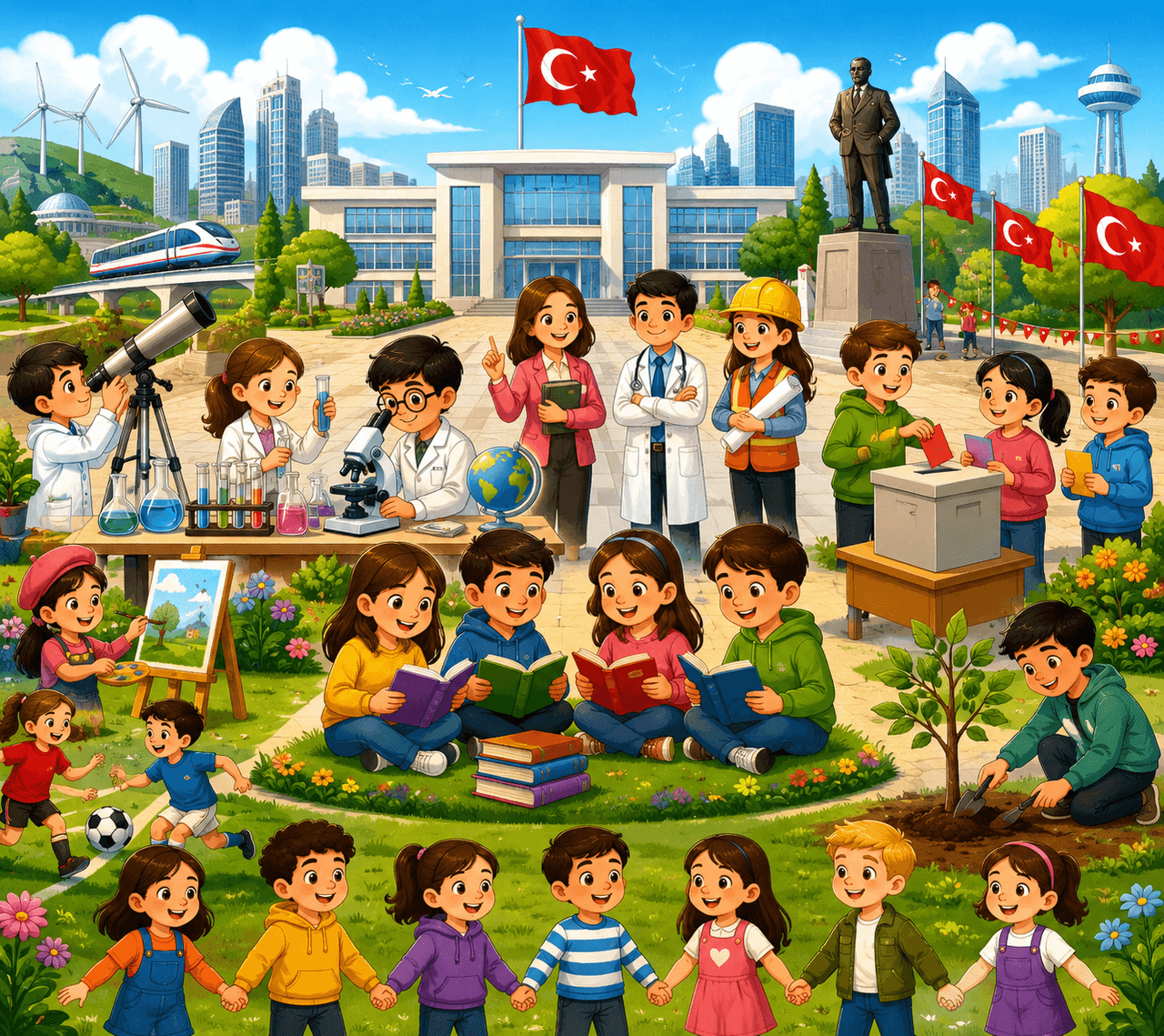
In the light of Atatürk’s principles(generated by artificial intelligence)
The Six Strong Pillars of Our Nation
Atatürk’s six fundamental principles, which are also enshrined in our current constitution, serve as the unshakable pillars of our country.
Republicanism: The Sovereignty Belongs to the Nation!
Republicanism means that those who govern the country are chosen by the people. In this system, the greatest power lies with the people, and no one is above them. According to Atatürk, this is the most suitable form of governance for the character of the Turkish nation; because republicanism also means freedom and democracy.
Nationalism: United in Solidarity
This principle means loving our country and ensuring that all citizens work together in unity, respecting one another. In Atatürk’s understanding of nationalism, there is no discrimination; anyone who feels themselves a part of this homeland and shares its culture is Turkish. This love teaches us not only to cherish our own nation but also to respect all nations of the world.
Populism: Everyone Is Equal
Populism holds that no one in society is superior to another. Regardless of wealth or poverty, every citizen has the same rights before the law. This principle ensures that the state works for the people and acts justly to secure the happiness and well-being of every individual.
Secularism: Reason and Freedom of Belief
Secularism means the separation of state affairs from religious affairs. Thanks to this principle, everyone is entirely free to believe in or worship whatever they choose, and the state protects this freedom. Secularism also means that when establishing societal rules, we must not stray from reason, logic, and science.
Statism: Development Through Unity
For our country to develop rapidly and for the people to attain prosperity, the state must take responsibility for major undertakings. Building large factories, constructing roads, and supporting the economy—areas where the private sector alone cannot suffice—are part of statism. This is a collective path to development aimed at enabling everyone to live under better conditions.
Revolutionism: Always Moving Forward!
The world changes and progresses every day. Revolutionism means adapting to these changes, embracing innovation, and continuously modernizing. Atatürk said, “My legacy is reason and science,” and he wished for us to always advance in the light of science, never falling behind our time.
Can a country have a compass? Just as a vast ship needs guiding ideas to find its way across an endless sea, a nation also requires guiding principles to reach a modern and peaceful future. Atatürk’s Principles are the name of this very special path drawn for the Türkiye Cumhuriyeti to become a stronger, freer, and more contemporary nation.
These ideas were not copied from elsewhere; they emerged entirely from the dreams and needs of the Turkish people. The greatest aim of these principles is for every citizen to live with dignity and independence. The principles are like the pieces of a puzzle; each completes the other, and none can function fully without the others.
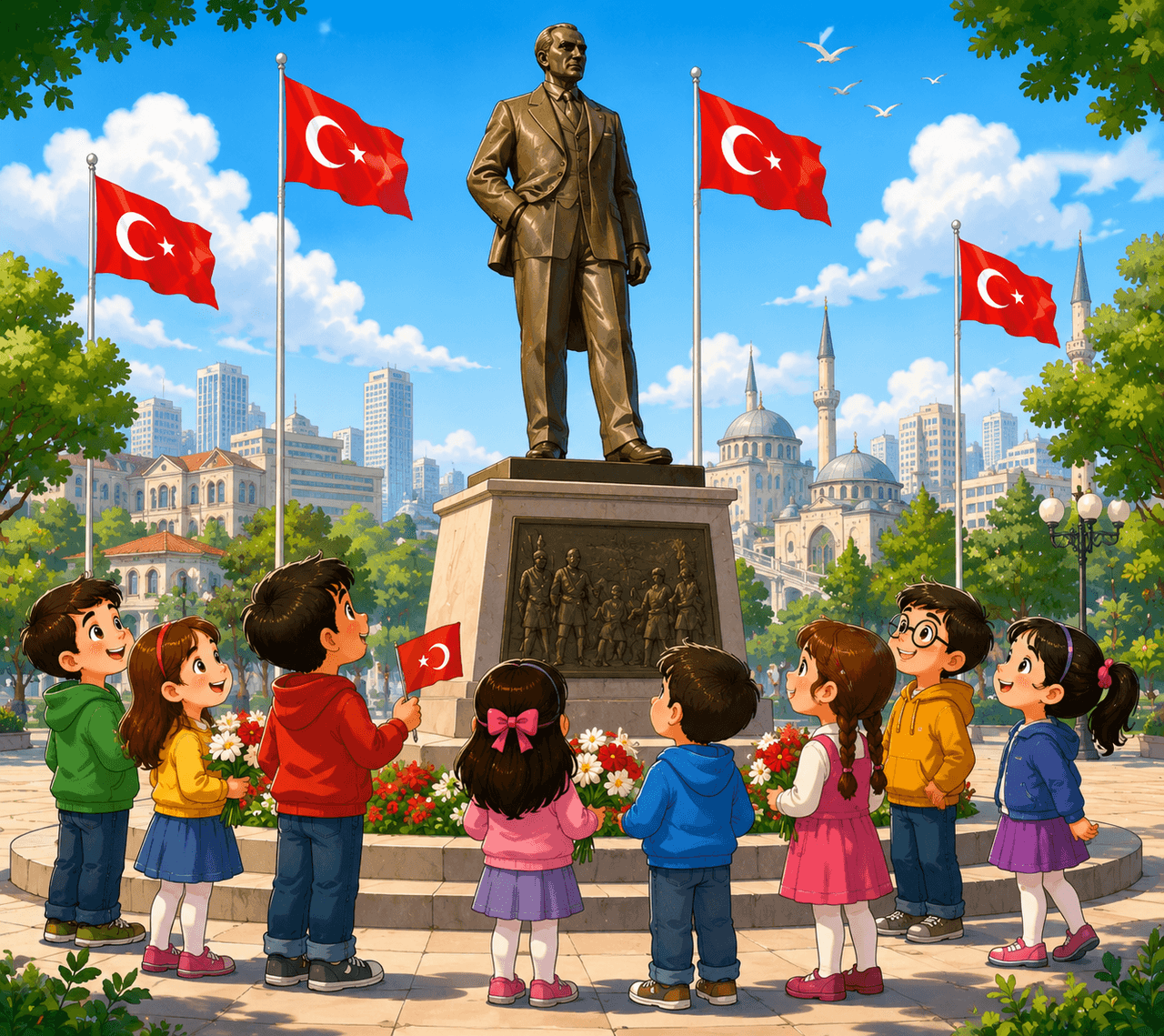
Along the path of Atatürk’s principles(generated by artificial intelligence)
Reforms Carried Out in Accordance with Atatürk’s Principles
Atatürk’s principles guided all reforms whose fundamental aim was to transform Turkish society into a modern and civilized society. The reforms carried out under these principles completely modernized the political, economic, and social structure of society.
The key changes resulting from these principles can be summarized as follows:
- Transition to Popular Sovereignty: With the principle of republicanism, personal rule was abolished and authority was directly transferred to the nation. This established a democratic system in which the people elect their own representatives.
- Acquisition of National Identity: Under the principle of nationalism, society was transformed from a fragmented “ummah” structure into a unified “nation” defined by a common language, culture, and set of ideals.
- Secular State Structure: With the principle of secularism, the theocratic state structure based on religion was abandoned in favor of a secular state structure guided by reason and science. This change separated religious and state affairs and guaranteed freedom of belief.
- Establishment of Modern Institutions: In accordance with the principle of revolutionism, outdated institutions that held back the Turkish nation or kept it behind its time were dismantled and replaced with modern and new institutions.
- Legal and Social Equality: Under the principle of populism, privileges within society were abolished and a system was introduced in which everyone is equal before the law. Fundamental rights such as gender equality and social justice were also secured.
- Economic Development: Thanks to the principle of statism, the state launched investments in areas where the private sector was insufficient, building factories and initiating a planned development campaign.
In short, these reforms were carried out to enable the Turkish nation to preserve its own identity while integrating into the modern world.





