

Misket (Marble)
Last Updated: 05/15/2026
Share
A traditional children’s game played in various regions of Türkiye, known as misket or bilye, helps develop hand-eye coordination and strategic thinking skills. The spherical pieces used in the game can be made from a variety of materials such as glass, stone, clay, iron, or bone.
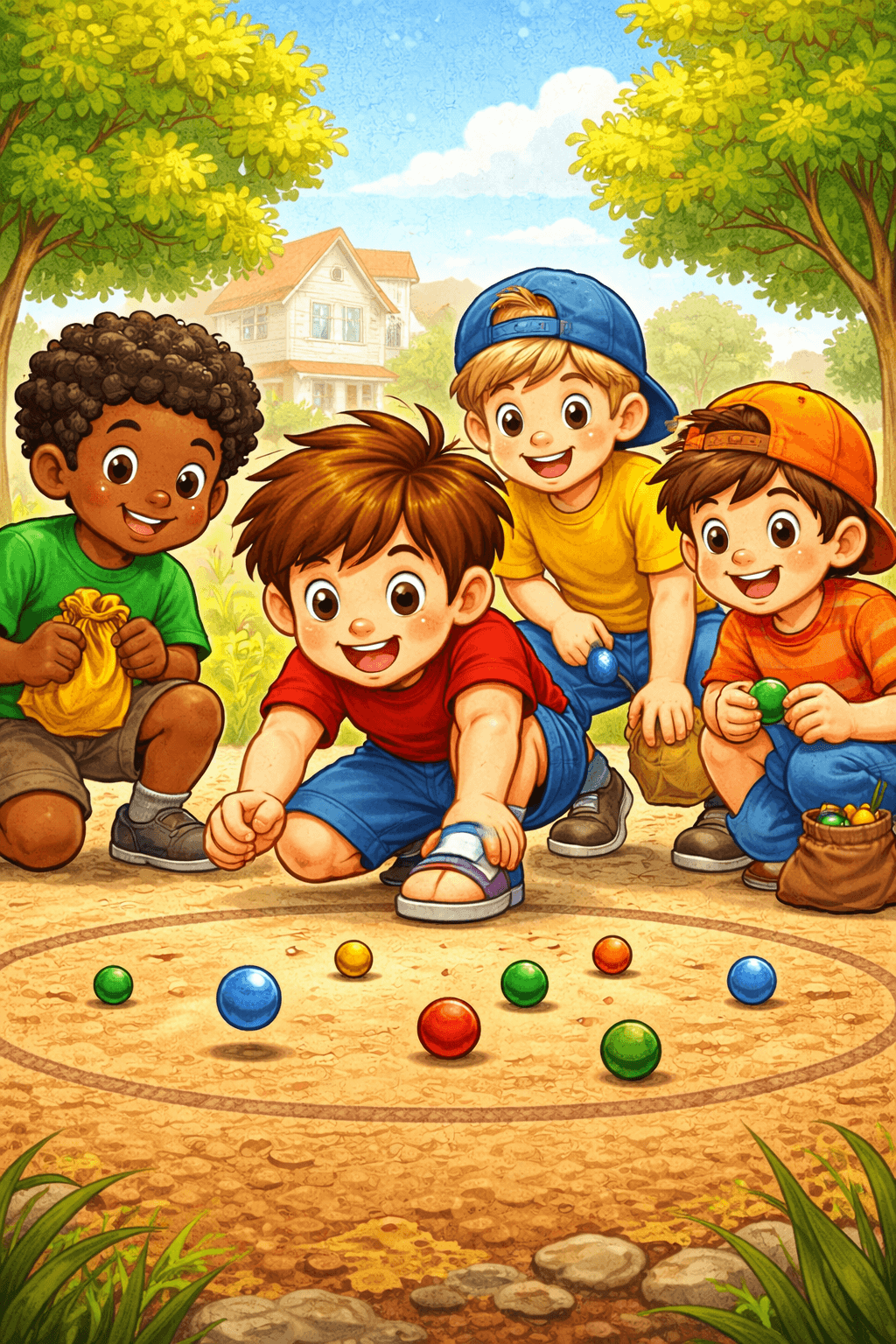
Generated by artificial intelligence.
Types of Marbles
Marbles vary according to the material they are made from, their size, and their color. For example, in some regions they are classified as follows:
- Standard transparent marbles: 1 unit.
- White (milky) marbles: 2 units.
- Large transparent marbles (löppe): 4 units.
- Iron marbles: 5 units.
- Black glossy marbles: 10 units
Game Variants
The game of marbles is played in various regional styles known as "Mersin", "Üçgen", and "Haboki":
- Triangle Game: A triangle is drawn on the ground with chalk, and each player places an equal number of marbles along or inside its lines. Players attempt to knock marbles out of the triangle using their main marble, called the "el bilyesi", from a designated distance known as "menzil". Any marble knocked outside the triangle becomes the property of the player who shot it.
- Mersin Game: Marbles are arranged in a straight line. Players throw their main marbles as far as possible; the player whose marble lands closest to the line determines the direction of play, either forward or backward. The player whose marble landed farthest away shoots first, and the goal is to knock all marbles in the designated direction toward the central marble and collect them.
- Haboki (Habibce) Game: Unique to the Solhan district of Bingöl, this variant requires marbles to be thrown through the air without touching the ground.
- Circle Game: Marbles are placed inside a large circle drawn on the ground. Players attempt to knock the marbles out of the circle using their own marbles held between their fingers.
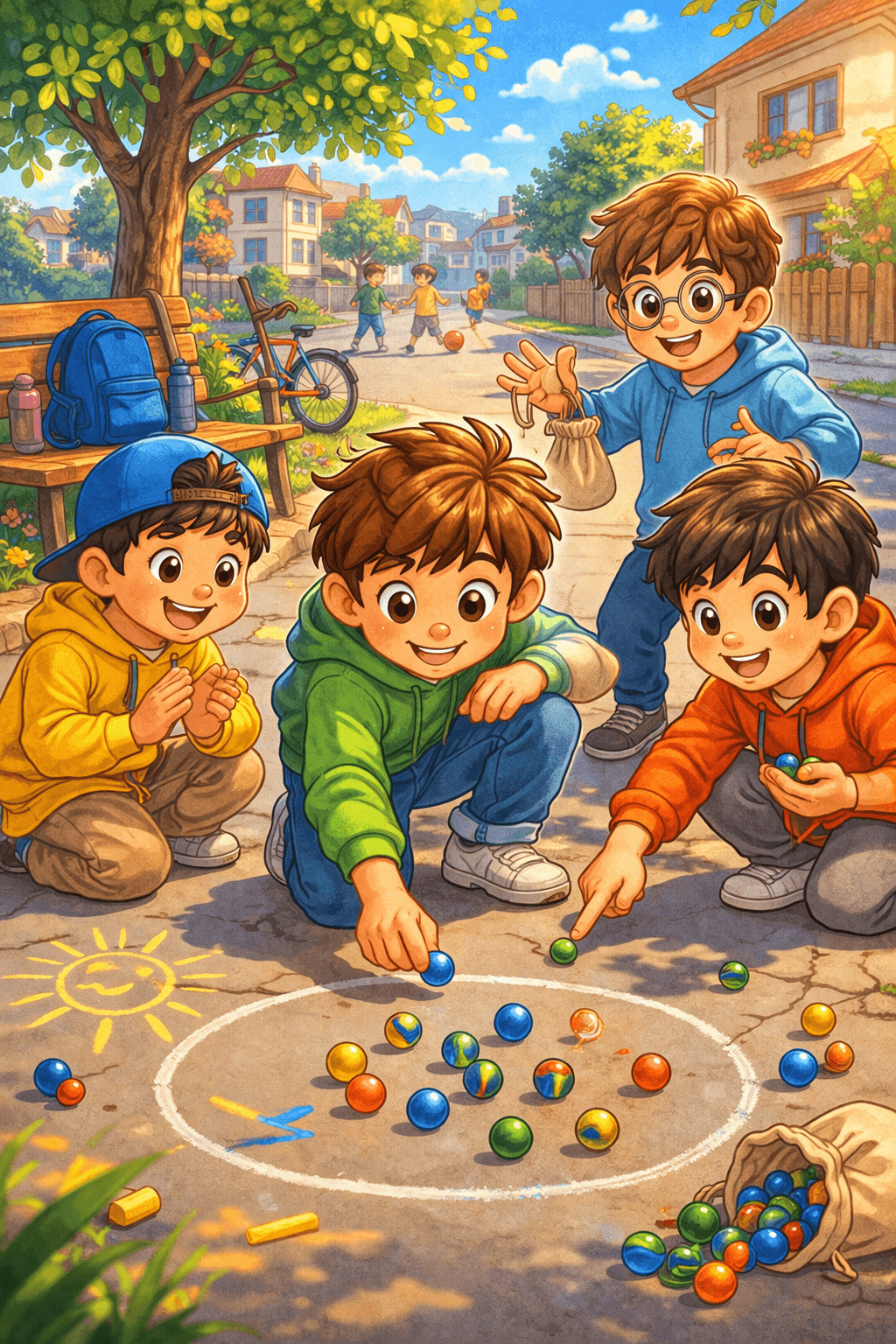
Generated by artificial intelligence.
Game Rules
The game involves several technical skills and terms:
- Adana Shot: A specialized shooting technique where the marble is held between the thumb and either the middle or ring finger.
- Tutuk Rule: If a player’s main marble strikes another player’s foot during a shot, it is called "tutuk"; the player must then shoot from the point where the opponent dropped their marble below the knee.
- Shooting Order: To determine shooting order, players throw their marbles toward a target line; the player whose marble lands closest to the line earns the right to shoot first.
Role in Child Development
The game of marbles has multifaceted positive effects on child development:
- Physical and Psychomotor Development: Strengthens the motor development of small muscle groups and hand-eye coordination. Accurate aiming enhances focus and attention skills in children.
- Cognitive Development: Players must plan their moves in advance and think carefully and in detail to outmaneuver opponents, thereby developing problem-solving abilities.
- Social Development: Played in groups, the game helps children adapt to social norms, follow rules, and build friendships. Excluding children who violate the rules provides an educational experience in understanding social conventions.