



Furrowing the brows
Have you ever noticed a slight change in people’s faces around you, especially when they become annoyed by something? Their eyebrows draw together toward the center, and their gaze becomes a little sharper. We call this reaction ""kaşlarını çatmak"". Raising one’s eyebrows is one of the most well-known ways to express inner emotions. Have you ever wondered why people do this?
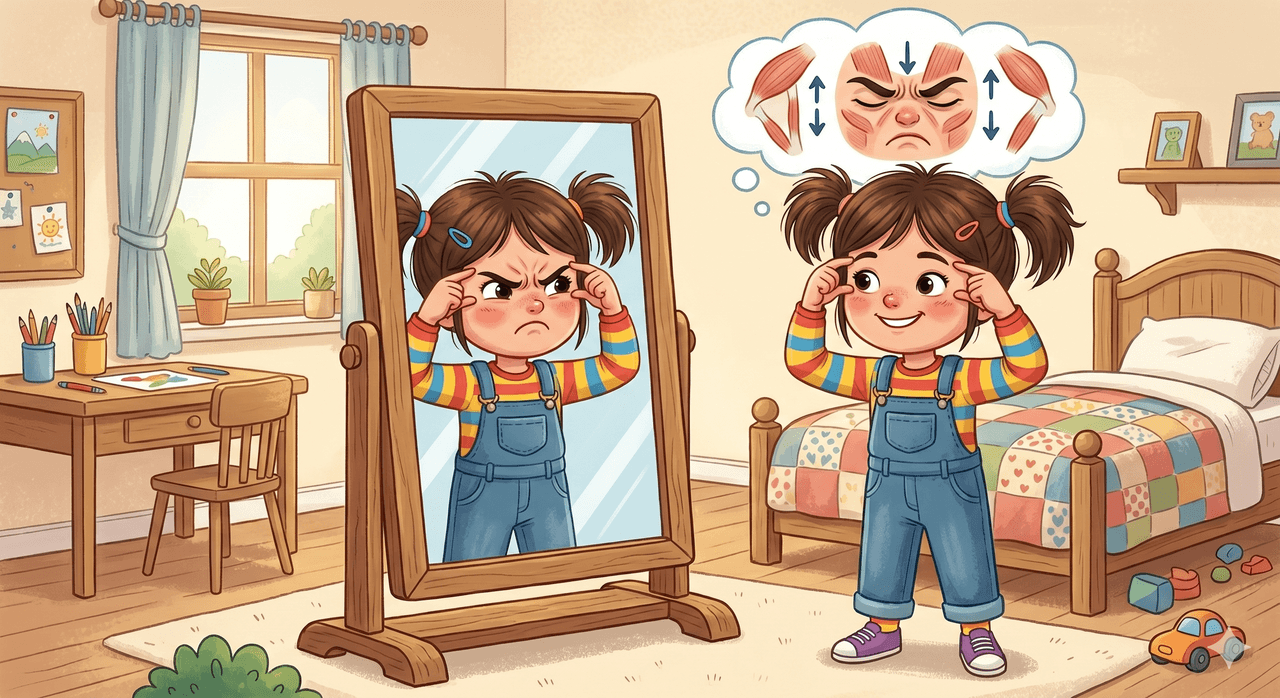
Representative Image (Generated by Artificial Intelligence)
The Way Our Body Speaks: Body Language
We do not express our emotions only through words. Sometimes, even when we say nothing at all, our bodies speak for us. This is called "body language". Raising one’s eyebrows is also a very important part of body language. According to the Turkish Language Association’s dictionaries, this expression means attempting to show that one is angry, furious, or irritated by pulling the eyebrows closer together. You might unconsciously raise your eyebrows when a friend breaks the rules during a game or encounters something unpleasant. The person facing you can understand that you are upset or angry simply by looking at your face, without you needing to say a word. In this way, your emotions become visible.

Representative Image (Generated by Artificial Intelligence)
Is Raising Eyebrows Only About Anger?
You might think that raising eyebrows always means anger or irritation, but the reality is not quite so simple. Sometimes we raise our eyebrows when solving a difficult math problem or when carefully reading a book we are very curious about. This is because focusing deeply on a subject or thinking intensely also causes the eyebrows to draw closer together. Additionally, when the sun is very bright outside, we involuntarily raise our eyebrows to shield our eyes from the light. Thus, this small facial movement has other useful functions for us beyond expressing anger.
Raising Eyebrows in Our Language
We use this expression frequently in daily life. For example, we might say to someone, "Don’t keep raising your eyebrows at me!" or encounter a sentence like "He began speaking with his eyebrows raised." Sometimes, a writer will craft a sentence such as "He turned and looked back; his gaze and his raised eyebrows became one, his face darkening." to convey a character’s anger most effectively to the reader.





