



Deve Geçidi Bridge
Devegeçidi Köprüsü (Diyarbakır Valiliği)
🏛️ Devegeçidi Köprüsü
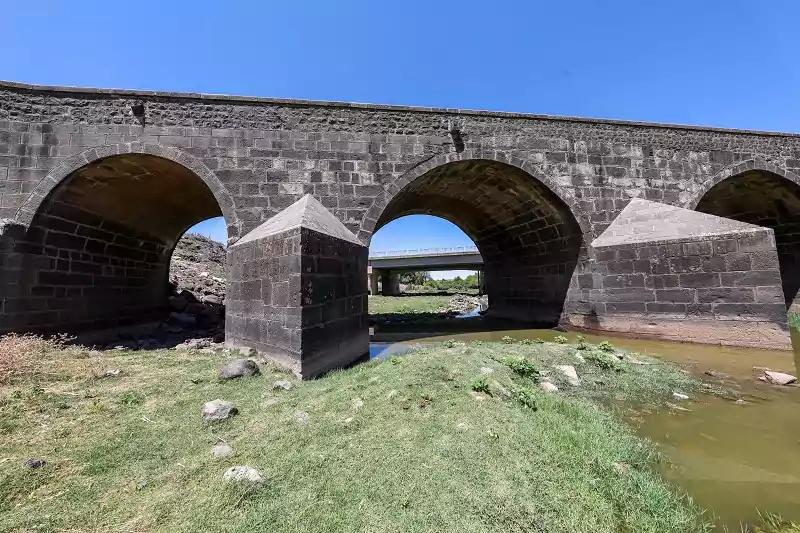
Devegeçidi Köprüsü is a historic stone bridge located in the north of Diyarbakır that has stood for centuries. According to the inscription on the bridge, it was constructed in 1218 during the Artuklu period under Melik Salih Mahmut by the architect Cafer bin Mahmud. For this reason, the bridge is regarded as one of the most important historical monuments in the region.
📍 Where Is It Located?
The bridge is situated on the Diyarbakır–Ergani–Elazığ road, approximately 23 kilometers from the Eğil–Dicle junction. Built over the Devegeçidi stream, it served as a major transit point in the past. Today, it remains a notable area admired for its natural beauty.
🏗️ How Was It Built?
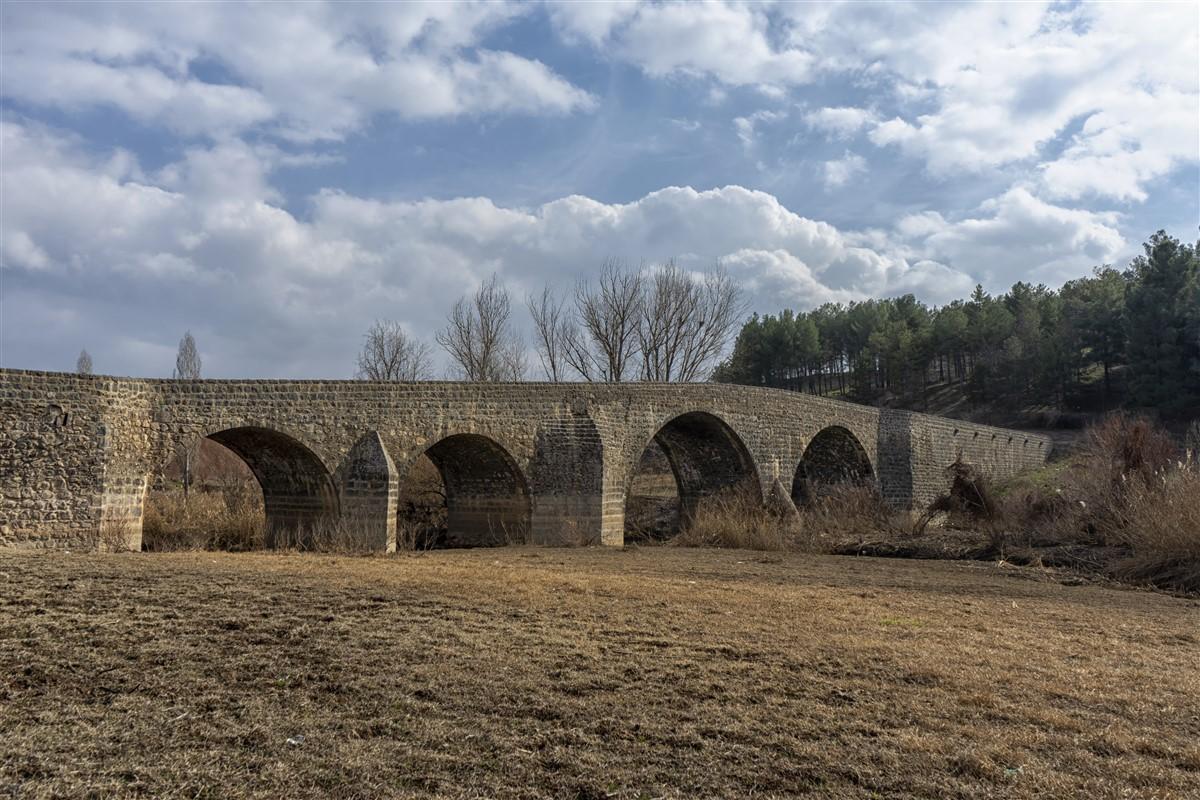
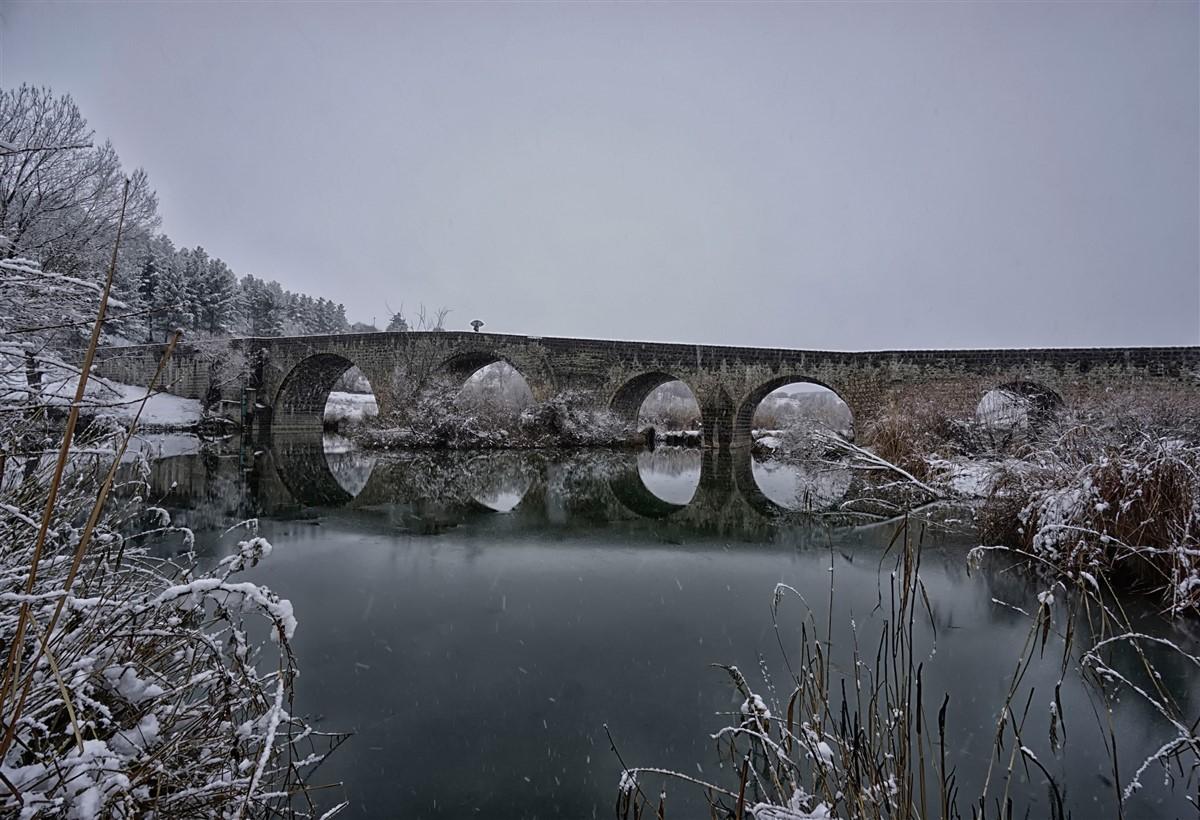
The bridge is constructed entirely of black basalt stone. It has a total length of approximately 95 meters and a width of 6.4 meters. It features seven arches, each of varying sizes.
The first three arches are semicircular. The bridge then slightly changes direction. The largest arch spans approximately 13.7 meters. With these characteristics, the bridge is one of the most remarkable examples of medieval stone bridge architecture.
🕰️ A Journey Through History
Since its construction, Devegeçidi Köprüsü has been actively used for many centuries. Due to its location along major trade routes, it served as a crossing point for caravans and travelers alike.
Some sources indicate that during the Ottoman period, under Sultan IV Murad, the bridge was repaired or reopened for use during the Baghdad Campaign. As a result, the structure is associated with multiple historical periods.
🌿 Today
Today, the area surrounding the bridge has been developed as a picnic ground. This natural setting offers visitors both relaxation and opportunities for exploration. The bridge remains in active use and continues to play an important role in local transportation.
🎨 Architectural Value
Devegeçidi Köprüsü stands out for its sturdy construction and aesthetic appearance. The skilled craftsmanship of the basalt stone, the varied dimensions of the arches, and the harmonious integration of the structure with its natural surroundings reflect the engineering and architectural understanding of its time.
Through these features, the bridge is not merely a transportation structure but also a historical and cultural heritage site.