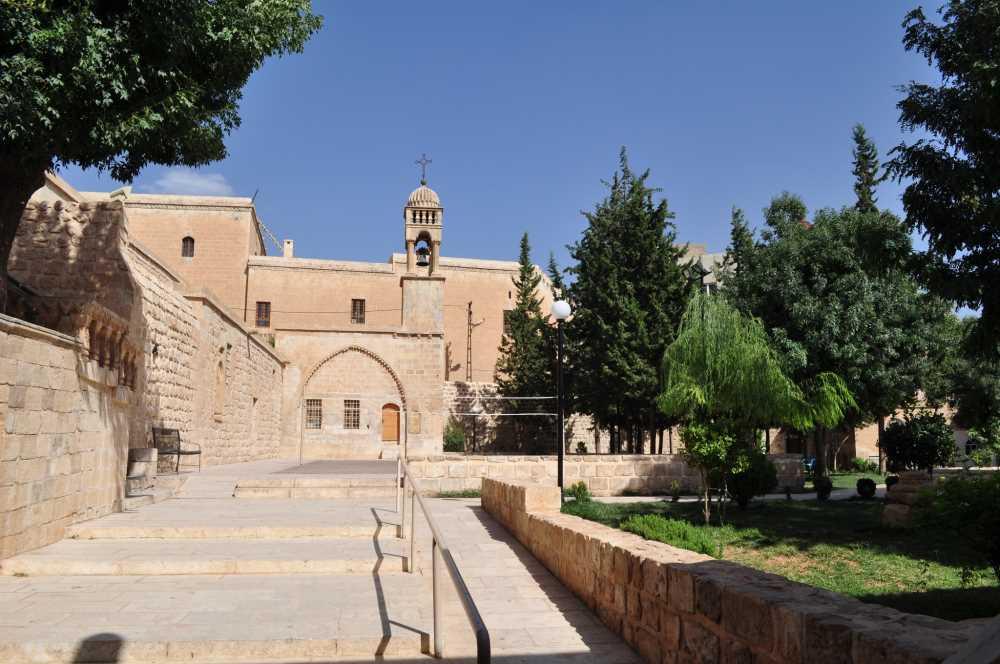
Church of Mor Behnam
Mardin’s narrow, historically charged streets reveal a massive and captivating structure built of stone. This is the Mor Behnam Church, also known as the Church of the Forty Martyrs, standing for exactly 1,500 years. This church is not merely a place of worship but resembles a vast historical book filled with thousands of stories. Let us explore together what these stones have to tell us.
Why Does This Church Have Two Names?
The church’s original name, Mor Behnam, derives from Mor Behnam and his sister Saro, who lived in the 4th century. They were two beloved and revered siblings in Syriac history. But why is it also called the Church of the Forty Martyrs?
Long ago, sacred relics from another church known as the Church of the Forty Martyrs were brought here. From that day forward, people began referring to this site as the Church of the Forty Martyrs. Thus, this structure carries within it the memory of both the two siblings and the forty martyrs.
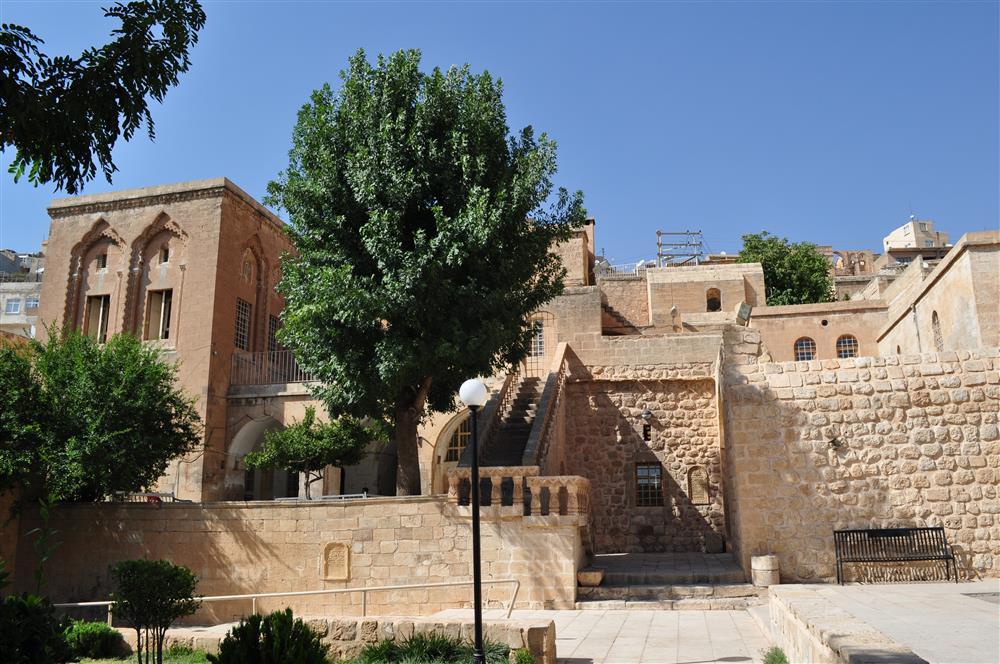
Mor Behnam Kilisesi (Kültür ve Turizm Bakanlığı)
What Is Inside the Church?
Upon entering the church, you are met by twelve large and sturdy columns that proudly support the ceiling as if holding up the sky. Yet what truly makes this place special are its small yet precious details. Inside, you will find doors made of walnut wood, handcrafted and decorated over 400 years ago. You can also see curtains made with root dyes that are fully 1,500 years old. These curtains are so ancient they seem to have been woven directly from time itself. Silver candelabras and handwritten ancient manuscripts further adorn the space like a museum.
Once, This Was a School
Did you know? Mor Behnam Church was not only a place of prayer. In 1799, a school was established here. For many years, children from Mardin studied lessons and played games among these stone walls, acquiring new knowledge. Education continued in this building until 1928. Thus, the courtyards once echoed with the voices of children just like you.
A Journey Through Time
The year 1293 is of great significance to the church. That year, it became the administrative and spiritual center for the Syriacs. In other words, the most important decisions in the region during that period were made within these walls.